 Prestige Awards 2025/26 Winner
Glazed Fire Doors: Combining Light and Safety
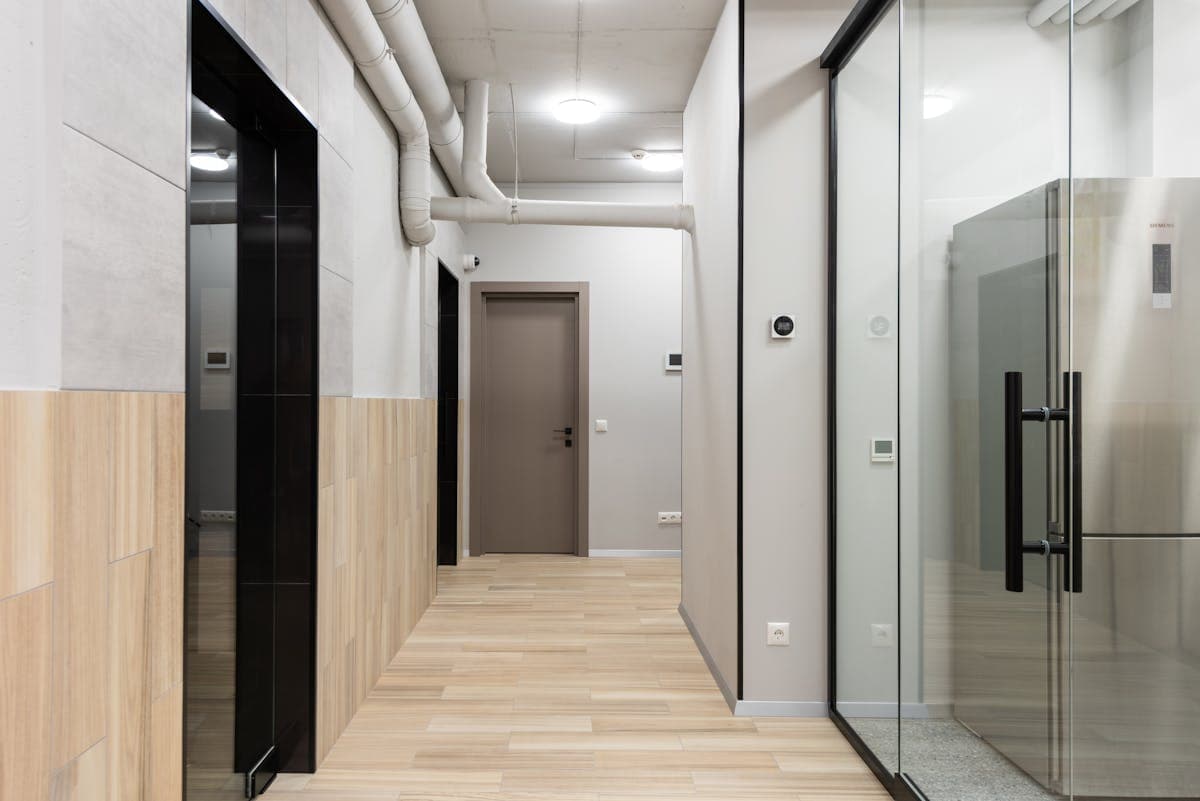
Glazed fire doors are one of the most versatile products in the fire door market. They allow architects and designers to maintain sight lines, bring natural light into corridors and stairwells, and create a sense of openness — all while providing the same level of fire resistance as a solid door. The key is understanding the different types of fire-rated glass and how they interact with the door assembly as a whole.
Types of Fire-Rated Glass
There are three main categories of fire-rated glass. Wired glass (Georgian wired) is the traditional option — it contains a wire mesh that holds the glass in place when it cracks under heat. It achieves integrity-only ratings and is relatively inexpensive, but it is visually dated and offers limited impact resistance. Borosilicate glass is a clear, unwired option that provides integrity protection by resisting thermal shock. It offers a much cleaner aesthetic than wired glass and is commonly used in FD30 applications.
The third category is intumescent-laminated glass, which consists of multiple layers of glass bonded with intumescent interlayers. When exposed to fire, the interlayers expand to form an opaque, insulating barrier. This type of glass can achieve both integrity and insulation ratings, making it suitable for locations where radiated heat on the non-fire side must be limited — for example, in escape routes where people will pass close to the door. It is the most expensive option but offers the highest performance.
Specification Considerations
The size and position of the glazed aperture must match the manufacturer's tested configuration. A door tested with a single rectangular vision panel cannot simply have a larger or differently shaped aperture cut into it. The glazing beads — the timber or steel sections that hold the glass in place — must be fire-rated and fitted with intumescent gaskets. Using standard timber beading is a common and dangerous shortcut that voids the door's certification entirely.
When specifying glazed fire doors, consider the building's fire strategy, the door's location, and the amount of glass area required. Fully glazed doors (with glass from near the bottom rail to near the top) are available in FD30 and FD60 ratings, but the glass type and bead system must be carefully matched. For corridors and lobbies, glazed fire doors are an excellent way to combine fire safety with a welcoming, well-lit environment. Always confirm that the complete assembly — leaf, glass, beads, seals, and hardware — has been tested together and is covered by the manufacturer's certification.
Looking for Fire Doors?
Browse our certified range of FD30 and FD60 fire doors.